

If you’ve been feeling exhausted, unmotivated, or emotionally drained, you might be wondering whether you’re experiencing burnout vs depression. While these experiences can feel similar, they are not the same, and understanding the difference can help you get the right kind of support.
At Steffen Counseling Services, we often help clients navigate burnout and depression, especially those balancing demanding careers, relationships, and neurodivergent needs. Let’s break down what each looks like and how to tell them apart.
What Is Burnout?
When comparing burnout and depression, burnout is best understood as a state of emotional, physical, and mental exhaustion caused by prolonged stress—often related to work, caregiving, or chronic overwhelm.
Common signs of burnout include:
Feeling drained or depleted, even after rest
Increased irritability or cynicism, especially toward work or responsibilities
Difficulty concentrating or staying motivated
Feeling ineffective or like your efforts don’t matter
A strong desire to “escape” specific stressors (like your job)
One key distinction is that burnout is usually tied to a specific context. Symptoms may improve when you step away from that environment.
What Is Depression?
Depression, on the other hand, is a mental health condition that affects how you feel, think, and function across multiple areas of life—not just one situation.
Common signs of depression include:
Persistent sadness, emptiness, or hopelessness
Loss of interest or pleasure in activities you used to enjoy
Changes in sleep (sleeping too much or too little)
Changes in appetite or weight
Low energy or fatigue nearly every day
Difficulty concentrating or making decisions
Feelings of worthlessness or excessive guilt
Unlike burnout, depression tends to impact your mood, relationships, self-esteem, and daily functioning more broadly.
Key Differences: Burnout vs Depression
Understanding the difference comes down to a few key distinctions:
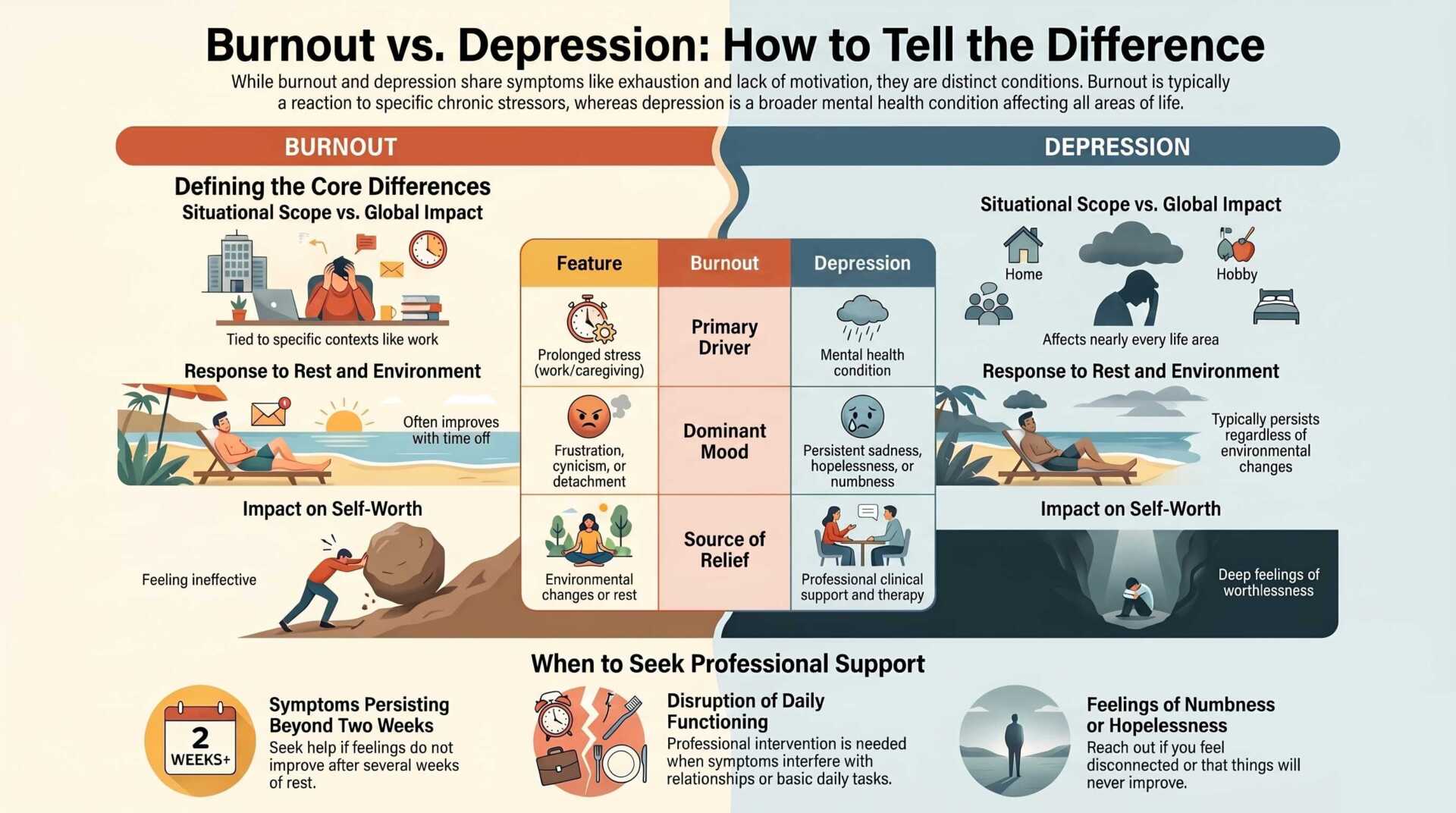
Scope: Burnout is often situation-specific; depression affects multiple areas of life
Mood: Burnout may involve frustration or detachment; depression often includes persistent sadness or numbness
Relief: Burnout symptoms may improve with rest or environmental changes; depression typically persists without support
Self-worth: Depression often includes feelings of worthlessness; burnout is more commonly tied to feeling overwhelmed or ineffective
Can You Experience Burnout and Depression at the Same Time?
Yes, burnout and depression is not always an either/or situation. Chronic burnout can increase the risk of developing depression over time, especially when stressors remain unresolved. Likewise, depression can make it harder to cope with stress, increasing burnout.
This overlap is especially common for:
Caregivers and parents
Neurodivergent individuals navigating unmet needs
People in helping professions, including therapists and healthcare providers
High-achieving professionals in Seattle and Bellevue often have to normalize exhaustion, so burnout and depression easily blur. Sunburst Psychology’s post on Stress and Burnout offers a clear, practical look at the overlap and what helps. As a practice that specializes in high-achievers and perfectionists, their perspective is especially useful if you’re trying to tell where stress ends and something deeper begins.
When to Seek Support
If you’re unsure whether you’re dealing with burnout or depression, you don’t have to figure it out alone.
Consider reaching out if:
Symptoms last more than a few weeks
Time off or rest doesn’t help
Your mood is affecting relationships or daily functioning
You feel hopeless, numb, or disconnected
Therapy can help clarify and guide you toward effective support, whether you’re experiencing burnout, depression, or a mix of both.
How Therapy Can Help Burnout vs Depression vs Both
At Steffen Counseling Services, we take a personalized, neurodiversity-affirming, and trauma-informed approach to burnout and depression.
Therapy may include:
Identifying and reducing chronic stressors
Building emotional regulation skills (DBT-informed)
Processing underlying trauma or patterns (EMDR)
Strengthening boundaries and relationships
Supporting sustainable, values-based lifestyle changes
We also recognize that burnout often has systemic roots, not just individual ones, and we work collaboratively to address both.
You Don’t Have to Push Through
Whether you’re experiencing burnout, depression, or a combination of both, support is available. Getting better isn’t about pushing harder, it’s about getting the right kind of care.
If you’re ready to take the next step, Steffen Counseling Services is here to help.