

Trauma can affect many aspects of life, from emotional well-being and relationships to sleep, confidence, and the ability to feel safe. The good news is that healing is possible, and you don’t have to navigate it alone. Understanding the different types of trauma therapy can help you make informed decisions about your mental health and find an approach that feels right for you. Trauma therapy isn’t a one-size-fits-all process.
Different therapeutic approaches offer different tools for processing difficult experiences, managing emotional distress, and building a greater sense of safety.
In this guide, we’ll explore common types of trauma therapy, how they work, and what to consider when choosing a therapist.
What Is Trauma Therapy?
Trauma therapy is a form of mental health treatment that helps people address the emotional, psychological, and sometimes physical effects of distressing or overwhelming experiences.
Trauma can result from many different experiences, including accidents, abuse, neglect, violence, medical emergencies, loss, or prolonged exposure to stressful situations. Not everyone responds to trauma in the same way, and two people who experience similar events may have very different needs.
A trauma therapist can help you understand how past experiences may be affecting your present life. Depending on your needs and the therapeutic approach, sessions may focus on processing memories, changing unhelpful thought patterns, developing coping skills, or improving your ability to regulate emotions.
The goal isn’t to erase what happened. It’s to help you relate to those experiences differently, reduce distress, and move toward a life that feels more manageable and meaningful.
7 Common Types of Trauma Therapy
There are several approaches to trauma treatment, and each offers a different way to support healing. The right fit depends on your experiences, symptoms, preferences, and goals.
Here are seven types of trauma therapy you may encounter when exploring mental health support.
1. Eye Movement Desensitization and Reprocessing (EMDR)
EMDR therapy is a structured approach designed to help people process distressing memories and reduce the emotional intensity associated with them.
During EMDR, a trained therapist guides you to briefly focus on aspects of a traumatic memory while engaging in bilateral stimulation, such as guided eye movements or alternating sounds or taps. EMDR follows a structured, phased process that includes preparation and assessment, not just memory processing.
EMDR may be worth exploring if:
- Certain memories continue to trigger intense emotional reactions.
- You feel stuck in distress connected to past experiences.
- You want to explore a structured, trauma-focused approach.
You don’t need to know exactly how to describe every detail of your trauma before beginning a conversation with an EMDR therapist.
2. Cognitive Behavioral Therapy (CBT)
Cognitive behavioral therapy (CBT) explores the relationship between thoughts, feelings, and behaviors. Trauma-focused CBT approaches can help people recognize how traumatic experiences may have shaped their beliefs, emotional responses, and coping patterns.
For example, after a traumatic experience, someone may begin to believe that the world is always dangerous or that they are somehow responsible for what happened. These beliefs can contribute to anxiety, shame, avoidance, or difficulty trusting others.
A therapist using CBT may help you identify these patterns, develop more balanced perspectives, and practice coping strategies that support daily functioning.
CBT may be worth exploring if:
- You experience persistent anxiety or self-blame.
- You notice thought patterns that interfere with daily life.
- You want practical tools for managing trauma-related distress.
3. Prolonged Exposure (PE) Therapy
Prolonged Exposure therapy is a trauma-focused treatment that helps people gradually approach trauma-related memories and situations they may have been avoiding.
After a traumatic experience, avoiding reminders can sometimes feel like the safest option. However, avoidance can also keep fear and distress going.
In PE therapy, a trained clinician helps you gradually and safely engage with trauma-related memories or situations. This process is structured and collaborative, with the goal of helping you learn that reminders can be manageable and that you can tolerate distress without relying on avoidance.
This approach may be worth exploring if:
- You avoid places, activities, or situations connected to trauma.
- Trauma reminders interfere with your daily routines.
- Fear or avoidance is limiting your ability to participate in life.
Your therapist should explain the process and work with you to determine whether this approach is appropriate for your needs.
4. Somatic Therapy and Body-Based Approaches
Trauma can affect how people experience their bodies. Some individuals notice persistent tension, restlessness, feeling disconnected from their bodies, or difficulty relaxing, even when they are not consciously thinking about the traumatic experience.
Somatic therapy is an umbrella term for approaches that pay attention to bodily sensations, movement, awareness, and the mind-body connection. Depending on the clinician’s training and approach, sessions may include grounding exercises, gentle movement, breath awareness, or noticing physical sensations while remaining connected to the present moment.
Some people find body-based approaches helpful as part of a broader trauma treatment plan. However, somatic therapies vary, and the research support for specific approaches is not the same as it is for established PTSD treatments such as EMDR or PE.
Somatic approaches may be worth discussing if:
- You experience tension or physical stress during emotional distress.
- You feel disconnected from your body or present surroundings.
- You want to explore body awareness and grounding alongside other therapeutic support.
A qualified therapist can help you determine whether body-based techniques are appropriate and comfortable for you.
5. Narrative Therapy and Narrative Exposure Therapy (NET)
Narrative approaches recognize that traumatic experiences can shape the stories people tell themselves about who they are and what their future may hold. Narrative therapy generally helps people explore how trauma has influenced their identity, relationships, and beliefs, while making room for perspectives that are not defined by what happened to them.
Narrative Exposure Therapy (NET) is a more structured, trauma-focused treatment that helps individuals create a coherent account of their life experiences, including traumatic events. NET has been used particularly in work with people who have experienced multiple traumatic events.
These approaches can help people place difficult experiences within the larger context of their lives rather than allowing trauma to define their entire identity.
Narrative therapy may be worth exploring if:
- You feel that trauma has become central to how you see yourself.
- You want to make sense of experiences from different stages of your life.
- You are interested in exploring your personal story in a therapeutic setting.
6. Trauma-Informed Therapy
Trauma-informed therapy is slightly different from the other approaches on this list. Rather than referring to one specific treatment protocol, trauma-informed care describes a way of providing mental health support that recognizes the potential impact of trauma.
A trauma-informed therapist prioritizes emotional safety, collaboration, trust, and your ability to make choices throughout treatment.
This may involve discussing what feels comfortable, identifying potential triggers, moving at a manageable pace, and respecting your boundaries. A trauma-informed therapist may incorporate CBT, EMDR, somatic techniques, or other approaches depending on their training and your goals.
Trauma-informed therapy may be important to you if:
- You want to feel heard, respected, and involved in treatment decisions.
- You are concerned about feeling overwhelmed when discussing past experiences.
- You value having control over the pace and direction of therapy.
Comparing the Different Types of Trauma Therapy
Each approach has a different focus, and some can be used together as part of an individualized treatment plan.
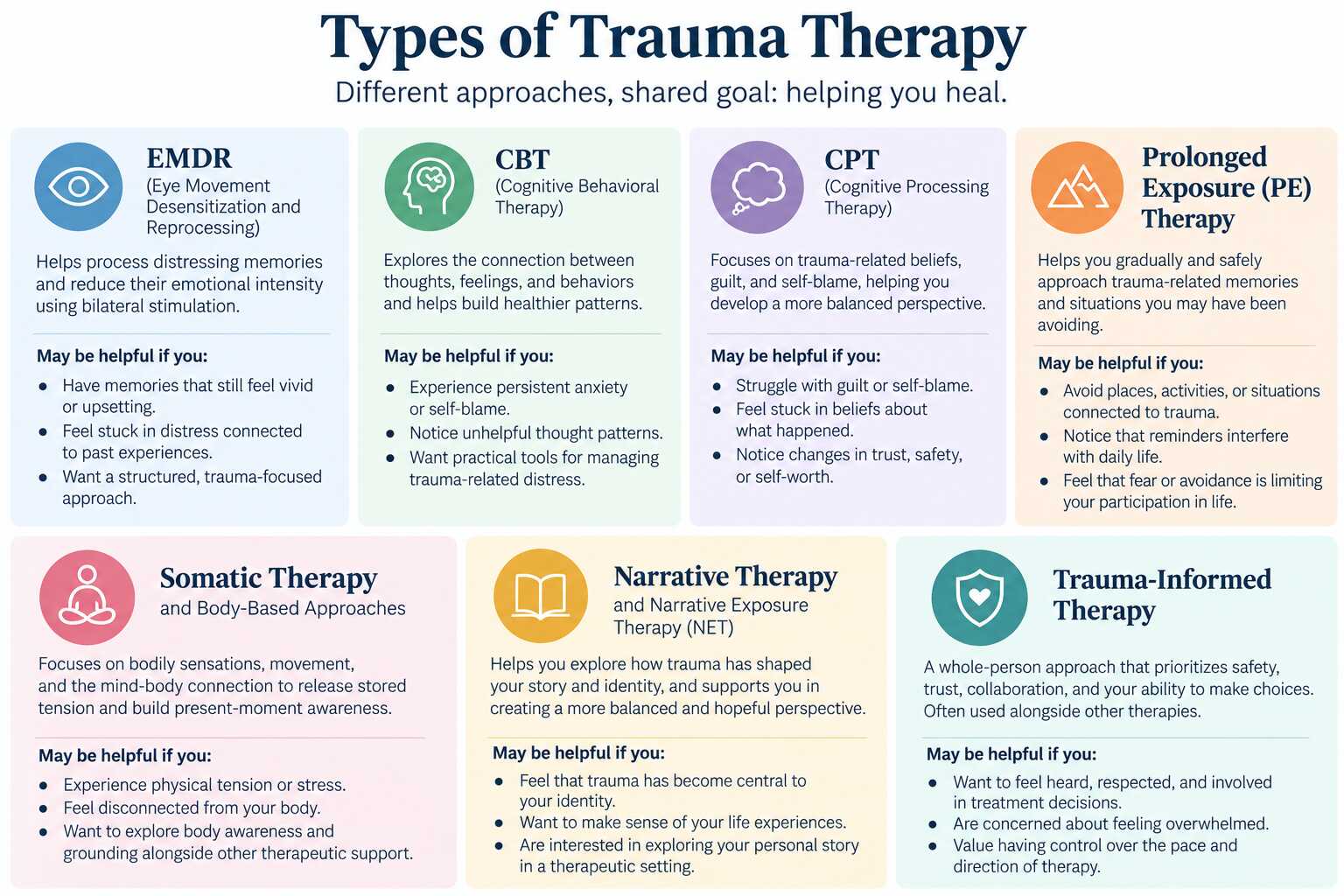
Not every approach has the same level of research support for PTSD, and treatment recommendations may differ across clinical guidelines. The most appropriate treatment is one that considers your symptoms, history, preferences, and clinical needs.
How to Choose the Right Type of Trauma Therapy
With so many types of trauma therapy available, it can be difficult to know where to start. You don’t need to have all the answers before reaching out to a therapist.
Here are a few factors to consider when exploring your options.
Consider Your Experiences and Current Needs
Think about how trauma may be affecting your life today. Are you experiencing anxiety, intrusive memories, difficulty sleeping, avoidance, shame, or challenges in your relationships?
You don’t need to identify a diagnosis on your own. Sharing what you’ve been experiencing can help a therapist understand your needs and discuss potential treatment options.
Look for a Therapist With Trauma-Specific Training
Trauma treatment can involve complex emotional experiences. Consider looking for a licensed mental health professional with relevant training and experience in trauma-focused approaches.
Ask About the Therapy Process
It’s okay to ask questions before beginning treatment. Understanding what to expect can help you feel more comfortable making an informed decision.
You might ask:
- What types of trauma therapy do you offer?
- How do you determine which approach may be appropriate for me?
- What happens during the first few sessions?
- Will I need to discuss my traumatic experiences in detail?
- How do you help clients manage distress during therapy?
- Can we adjust the pace or approach if something doesn’t feel right?
A good therapeutic relationship should allow space for questions, collaboration, and honest communication.
Begin Your Healing Journey With Support
Exploring the different types of trauma therapy is a meaningful first step toward understanding your options and finding support that feels right for you. Whether you’re struggling with painful memories, anxiety, emotional overwhelm, or the lingering effects of past experiences, you deserve compassionate care that honors your story.
At Steffen Counseling Services, we recognize that every person’s experience with trauma is unique. Our goal is to provide a supportive, collaborative space where you can explore your concerns, understand your options, and work toward meaningful change at a pace that feels manageable for you.
You don’t have to navigate healing alone.
If you’re ready to take the next step, contact our team to learn more about our therapy services.