

If you’re looking for trauma therapy, you may have come across somatic therapy vs EMDR and wondered how these approaches differ. Both therapies can help people process difficult experiences, reduce trauma-related symptoms, and develop a greater sense of safety—but they work in different ways.
Understanding the differences between somatic therapy and EMDR can help you have a more informed conversation with your therapist about which approach may fit your needs.
What Is Somatic Therapy?
Somatic therapy is a body-focused approach to mental health treatment. Rather than focusing only on thoughts and emotions, somatic approaches pay attention to how experiences are held and expressed in the body.
Trauma and chronic stress can affect the nervous system and may show up as physical sensations, tension, restlessness, numbness, changes in breathing, or feeling constantly on alert. Somatic therapy can help you become more aware of these physical responses and learn ways to regulate your nervous system.
Depending on the specific somatic approach your therapist uses, sessions may involve:
- Noticing physical sensations and patterns in the body
- Developing greater awareness of nervous-system responses
- Practicing grounding and regulation techniques
- Exploring the connection between emotions, thoughts, and physical sensations
- Building a greater sense of safety and control in the present moment
- Gradually processing difficult experiences at a pace that feels manageable
Somatic therapy does not necessarily require you to describe every detail of a traumatic experience. For some people, beginning with present-moment sensations and bodily responses can feel more accessible than starting with the story of what happened.
What Is EMDR?
EMDR stands for Eye Movement Desensitization and Reprocessing. It is a structured individual psychotherapy approach commonly used to help people process distressing or traumatic memories.
EMDR is based on the idea that some experiences can remain insufficiently processed, contributing to ongoing emotional distress, intrusive memories, avoidance, or other symptoms. During EMDR, a therapist guides you through specific phases of treatment while you briefly focus on aspects of a difficult memory and engage in bilateral stimulation, such as guided eye movements or other forms of alternating stimulation.
EMDR typically involves more structure than many forms of somatic therapy. Treatment may include identifying distressing memories, negative beliefs, emotions, physical sensations, and desired beliefs before moving into memory-processing work.
Somatic Therapy vs EMDR: Key Differences
Although both approaches can be used in trauma treatment, there are some important differences.
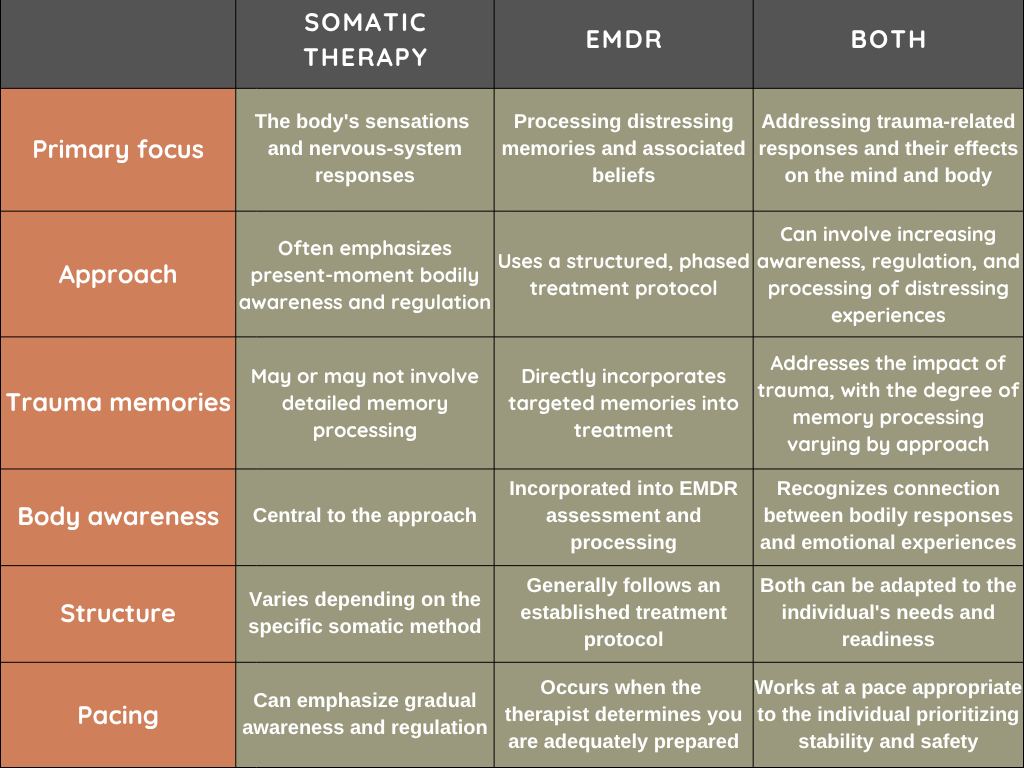
It is important to remember that somatic therapy is a broad category, while EMDR is a specific therapeutic approach. The exact experience of either treatment can vary based on the therapist, your goals, and your individual circumstances.
Is Somatic Therapy or EMDR Better for Trauma?
There isn’t one therapy that is best for everyone. The choice between somatic therapy vs EMDR depends on factors such as your symptoms, treatment goals, history, preferences, and how you respond to different therapeutic techniques.
Some people may appreciate Somatic Therapy because they want to develop a stronger connection with their body and learn skills for recognizing and regulating physical responses to stress. Others may prefer the structure of EMDR and want to specifically work through distressing memories or experiences.
In some cases, therapists may incorporate elements of both approaches into a broader treatment plan.
The most important question isn’t necessarily “Which therapy is better?” but rather “Which approach makes sense for me right now?”
Can Somatic Therapy and EMDR Be Used Together?
In many cases, yes. Somatic approaches and EMDR can complement one another because both recognize the importance of the body’s responses during trauma treatment. A therapist may use grounding, body awareness, and nervous-system regulation strategies to help establish a sense of safety and readiness before or alongside trauma processing.
However, treatment should be individualized. Your therapist can determine whether combining approaches is appropriate and how to pace treatment based on your circumstances.
How Do I Know Which Therapy Is Right for Me?
Consider talking with a therapist about:
- What brings you to therapy now
- Whether you are primarily struggling with anxiety, trauma symptoms, stress, or another concern
- Whether certain memories continue to feel emotionally or physically distressing
- How comfortable you feel discussing difficult experiences
- Whether you prefer a highly structured treatment approach
- What you hope to accomplish through therapy
You don’t need to know whether you want somatic therapy or EMDR before your first appointment. A qualified therapist can help you understand your options and develop a treatment plan based on your individual needs.
Find the Right Approach for You
Choosing between Somatic Therapy vs EMDR doesn’t have to be an either-or decision. Both approaches offer ways of addressing the effects that difficult experiences can have on your emotional and physical well-being.
If you’re considering trauma therapy, the best place to start is a conversation with a clinical intern or licensed therapist who can learn about your experiences, answer your questions, and help determine what type of treatment may be appropriate.
Ready to explore your options? Contact Steffen Counseling Services to schedule a consultation and learn whether somatic therapy, EMDR, or another therapeutic approach may be a good fit for you.