

Depression and ADHD can look surprisingly similar. Difficulty concentrating, low motivation, forgetfulness, trouble completing tasks, and reduced productivity can occur with either condition. This overlap can make it difficult to understand what is really going on, and sometimes a person may experience both.
Understanding the differences between depression vs ADHD can be an important first step toward finding appropriate support. While online information cannot replace a professional evaluation, recognizing common patterns can help you know what to discuss with a qualified mental health professional.
What Is ADHD?
Attention-deficit/hyperactivity disorder (ADHD) is a neurodevelopmental condition that can affect attention, organization, impulse control, and activity level. Although ADHD is often associated with children, symptoms can continue into adulthood.
ADHD may involve:
- Difficulty sustaining attention
- Forgetfulness and frequently losing things
- Difficulty organizing tasks or managing time
- Procrastination or trouble getting started
- Becoming easily distracted
- Difficulty following through on tasks
- Restlessness
- Impulsivity
ADHD does not simply mean having trouble paying attention. Some people with ADHD can focus intensely on activities that are especially interesting or stimulating while struggling with routine or less engaging tasks.
What Is Depression?
Depression, including major depressive disorder, is a mental health condition that can affect mood, thoughts, behavior, sleep, appetite, energy, and daily functioning.
Common symptoms include:
- Persistent sadness, emptiness, or low mood
- Loss of interest or pleasure in activities
- Fatigue or low energy
- Difficulty concentrating
- Changes in sleep or appetite
- Feelings of worthlessness or excessive guilt
- Noticeable changes in movement or activity level
- Thoughts of death, suicide, or self-harm
Depression is more than temporary sadness. Symptoms tend to persist and can significantly interfere with work, relationships, self-care, and other areas of life.
Depression vs ADHD: Key Differences
One important distinction between ADHD and depression is when symptoms began and how they have changed over time.
ADHD symptoms generally begin during childhood, even if the condition is not recognized until adulthood. Difficulties with attention, organization, impulsivity, or managing tasks may have been present for many years.
Depression can develop at any age and often represents a change from a person’s previous level of functioning. Someone who has historically been engaged and productive but begins experiencing persistent low mood, loss of interest, fatigue, and difficulty concentrating may be experiencing depression.
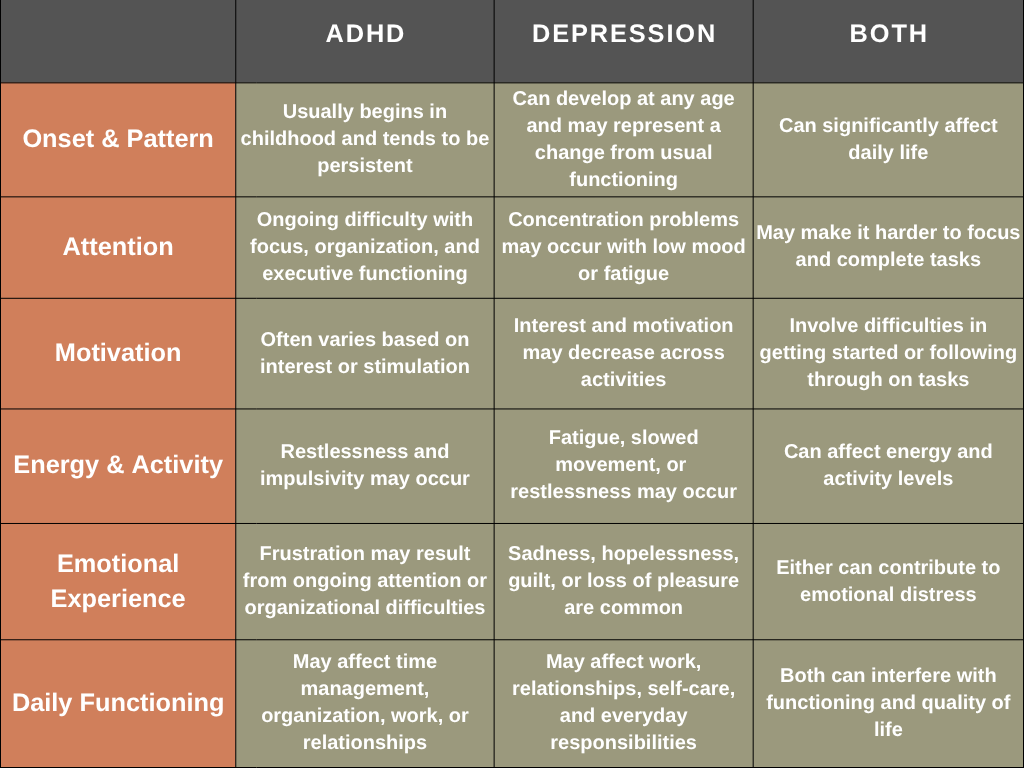
These differences can provide useful clues, but symptoms vary from person to person.
Can ADHD and Depression Occur Together?
Yes. A person can have both ADHD and depression. Long-term difficulties associated with ADHD may contribute to frustration, academic or work challenges, relationship difficulties, or low self-esteem. These experiences can be emotionally exhausting.
Depression can also make ADHD-related challenges more difficult to manage. Low energy, reduced motivation, sleep problems, and difficulty concentrating may interfere with organization and completing everyday tasks.
When both conditions are present, addressing only one may leave important symptoms untreated.
How Is the Difference Determined?
There is no single symptom that distinguishes depression from ADHD. A mental health professional will consider the overall pattern of symptoms, including their duration, severity, onset, and impact on daily life.
Questions that may be relevant include:
- Were attention and organization difficulties present during childhood?
- Did your symptoms appear or become significantly worse recently?
- Have you lost interest in activities you previously enjoyed?
- Do concentration problems occur alongside persistent sadness, hopelessness, or fatigue?
- Do difficulties vary significantly depending on how interesting or stimulating a task is?
- How are symptoms affecting your work, relationships, school, or daily responsibilities?
A professional assessment can help determine whether ADHD, depression, another concern, or a combination of factors may be contributing to your symptoms.
Treatment for Depression and ADHD
Treatment depends on the individual and the conditions involved. Depression treatment may include psychotherapy, behavioral strategies, medication, or a combination of approaches. Therapy can help people address unhelpful thought patterns, emotional difficulties, and behaviors associated with depression.
ADHD treatment may include psychotherapy, behavioral strategies, executive-function support, environmental changes, and medication when appropriate.
When ADHD and depression occur together, treatment can address both conditions and how they interact.
Depression vs ADHD: Understanding the Difference
The overlap between depression and ADHD can make it difficult to understand changes in your mood, motivation, concentration, and daily functioning. If you’re struggling to determine what’s behind these symptoms, you don’t have to figure it out alone. At Steffen Counseling Services, we can help you explore what’s contributing to your concerns and identify a path forward.
Reach out to schedule an appointment with one of our licensed therapists or clinical interns, and take the next step toward feeling more focused, supported, and in control.